
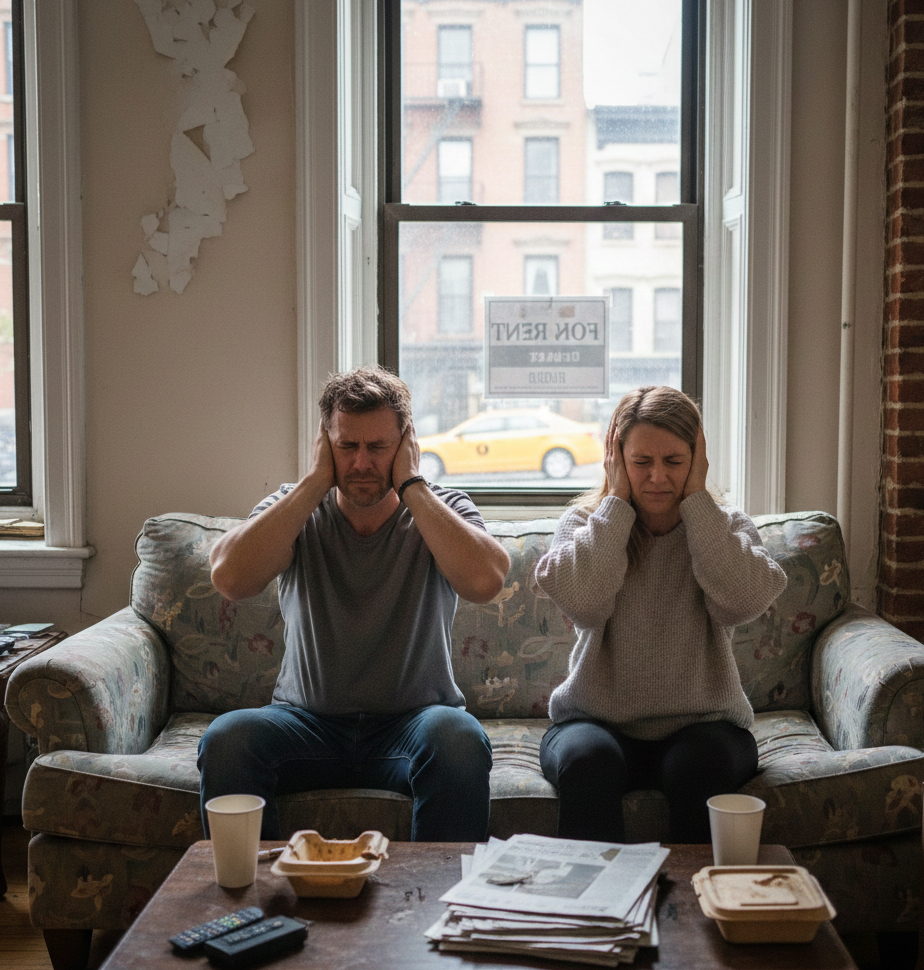
Tenants often ask, “Can my landlord start an eviction against me for noise?” At the same time, landlords frequently ask, “Can I evict a tenant for noise?”
Under New York law, the answer to both questions is yes—but only under limited and well-defined circumstances. Noise alone is not enough to justify eviction. To lawfully evict a tenant based on noise, a landlord must prove that the conduct rises to the level of a legal nuisance and substantially interferes with the comfort or safety of other occupants. Courts apply a strict standard, and many noise-based eviction cases fail because the landlord cannot meet the evidentiary or procedural requirements.
This article explains when noise can justify eviction in New York, what landlords must prove, and what defenses tenants may have.
When Can a Landlord Evict a Tenant for Noise in New York?
New York law authorizes eviction where a tenant is “committing or permitting a nuisance” or where the tenant’s conduct “substantially interferes with the comfort or safety” of the landlord or other occupants. This standard appears across multiple statutory schemes, including the Good Cause Eviction Law (Real Property Law § 216), the New York City Rent Control Law (Administrative Code § 26-408), and the Emergency Housing Rent Control Law (Unconsolidated Laws § 8585). Although these statutes apply to different categories of housing, the operative language is materially the same and reflects a high threshold.
Importantly, courts interpreting these provisions have repeatedly emphasized that not all noise qualifies as a nuisance, even where neighbors complain or management receives repeated reports.
What Counts as a Legal Noise Nuisance?
New York courts have made clear that a legally actionable nuisance requires more than loud or unpleasant noise. A nuisance sufficient to support eviction must involve a pattern of ongoing or recurring conduct that threatens or seriously interferes with the comfort, safety, or use and enjoyment of the premises by others.
Courts emphasize that continuity is key. Isolated incidents, short-term disturbances, or occasional loud behavior generally do not meet the legal threshold. The interference must be substantial, not trivial, and any alleged threat from the nuisance must be real and imminent rather than speculative or exaggerated.
In KDG Albany, LP v. Dixon, 62 Misc.3d 557 (Civ. Ct. Albany Co. 2018), the court dismissed a nuisance eviction where the neighbor’s complaint was “too vague and imprecise with respect to time,” and where the notice of breach failed to allege that the tenant played music or electronics in a disruptive manner. The court held that conclusory allegations, unsupported by concrete facts, cannot establish a nuisance.
In other words, normal residential noise, even if annoying, does not automatically become grounds for eviction.
What Evidence Must a Landlord Prove in a Noise Eviction Case?
To succeed in a noise-based eviction, a landlord must present specific, detailed, and credible evidence. Courts routinely reject cases built on vague or conclusory allegations. Complaints that fail to identify dates, times, frequency, or the nature of the alleged noise are often deemed legally insufficient.
In one case, a landlord’s eviction claim was dismissed because the neighbor’s complaints were too vague and the notice of breach failed to specify that the tenant was allegedly playing loud music. The court held that generalized claims, without factual detail, cannot establish a nuisance.
By contrast, courts have upheld eviction where landlords demonstrated an extreme and sustained pattern of disruptive behavior affecting multiple occupants, including repeated disturbances, harassment, and refusal to stop despite warnings. These cases typically involve conduct far beyond ordinary residential noise.
What Courts Consider a Noise “Nuisance”
New York courts have consistently defined a nuisance as conduct that threatens the comfort and safety of others and involves a pattern of continuity or recurrence, rather than isolated incidents.
In 121 Irving MGM LLC v. Perez, 56 Misc.3d 694 (Civ. Ct. Kings Co. 2017), the court explained that the “key to the definition” of nuisance is ongoing objectionable conduct and held that any alleged threat must be real and imminent, not speculative. The court made clear that occasional disturbances, even if irritating, do not automatically meet the nuisance standard required for eviction.
Similarly, in Beuhler 1992 Family Trust v. Longo, 63 Misc.3d 508 (Civ. Ct. Richmond Co. 2019), the court reiterated that a nuisance must interfere with a person’s use and enjoyment of land, including the “pleasure and comfort derived from occupancy” and freedom from unreasonable annoyance. There, the eviction was upheld not because of ordinary noise, but because the tenant engaged in an extreme and sustained pattern of disruptive conduct, including sending over 11,000 harassing emails to the landlord, disrupting private events, and repeatedly using profanity and racial slurs. The case illustrates the level of severity and persistence courts expect before authorizing eviction.
Notice to Cure: A Common Weak Point in Landlord Cases
Even where noise may rise to the level of a nuisance, landlords must still comply with strict procedural requirements. In rent-stabilized apartments, landlords are generally required to serve a notice to cure before commencing eviction proceedings.
In 3515 Eastchester Road, LLC v. Soto, 242 N.Y.S.3d 896 (App. Term 1st Dep’t 2025), the court reaffirmed that landlords must provide tenants with notice and an opportunity to cure alleged violations before seeking eviction. Failure to do so can result in dismissal, regardless of the alleged conduct.
Courts also scrutinize the content of the notice itself. In 239 Mulberry LLC v. Anglisano, 51 Misc.3d 869 (Civ. Ct. N.Y. Co. 2016), the court held that a notice to cure must contain sufficient factual detail, including dates, times, and descriptions of the alleged nuisance conduct, to allow the tenant to meaningfully respond and correct the behavior. Boilerplate or vague notices are routinely rejected.
Failure to provide an adequate notice to cure is one of the most common reasons noise-based eviction cases are dismissed, regardless of the seriousness of the allegations.
When Noise Comes From Other Tenants
Noise disputes are not limited to tenant misconduct. Tenants also ask whether a landlord can be held responsible for persistent noise caused by other occupants. New York law recognizes an implied covenant of quiet enjoyment and the warranty of habitability, which protect tenants from substantial interference with residential use.
According to 43 Am. Jur. Proof of Facts 3d 329 and 9A N.Y. Practice, Environmental Law and Regulation in New York § 17:17, persistent and severe noise—if known to the landlord and left unaddressed—may support claims for rent abatement or constructive eviction. However, courts are clear that occasional or intermittent noise is insufficient, and tenants generally must show landlord knowledge, failure to act, and significant interference.
The Bottom Line on Noise Evictions in New York
While New York law does allow landlords to evict tenants for noise, eviction is permitted only where the noise constitutes a continuing, substantial nuisance, supported by specific evidence and proper notice. Courts routinely dismiss cases based on vague complaints, isolated incidents, or defective notices.
If you are asking “Can my landlord start an eviction against me for noise?” or “Can I evict a tenant for noise?”, the answer depends entirely on the facts, the quality of proof, and strict compliance with New York landlord-tenant law.
This article is for informational purposes only and does not constitute legal advice. Every case turns on its own facts and applicable housing regulations.